

Gold Earrings for Daily Wear: The 2026 Buying Guide Stylists Wish You'd Read Before Wasting Money

Most women own at least one pair of gold earrings they never reach for. They're too heavy, too itchy, too snaggy, or just wrong for their face. This guide fixes that — by walking you through every style, karat, size, closure, and care rule that actually matters for everyday wear, so the next pair you buy becomes the pair you never take off.
The 30-Second Cheat Sheet
- Best everyday metal: solid 14K gold (most durable) or 18K (richer color, more hypoallergenic).
- Best everyday styles: 4–6 mm studs, 8–12 mm huggies, or 14–18 mm small hoops.
- Comfort rule: keep total earring weight under 2 grams per ear.
- Closure rule: hinged huggies or screw-backs for security; silicone push-backs for lightweight studs.
- Care rule: remove before showering, lotion, and the gym; wipe after wear.
Why Daily Gold Earrings Deserve Real Strategy
A daily earring is the only piece of jewelry that touches your skin for 12 to 18 hours a day, gets slept on, brushed against headphones, sprayed with perfume, and rinsed in the shower. That punishment list is exactly why the prettiest earring in the store often isn't the best one for everyday life. The right daily pair has to balance three things at once: comfort, durability, and a look you can wear with both a t-shirt and a blazer.
Here's the good news — once you understand a few simple rules around karat, weight, closure, and proportion, choosing becomes almost effortless.
Step 1: Choose the Right Karat (14K vs 18K vs 22K)
Gold purity is measured in karats. Pure 24K gold is too soft to handle daily knocks, so jewelers alloy it with other metals for strength. For everyday earrings, the sweet spot sits between 14K and 18K.
14K Gold (58.3% pure)
Pros
- Highly scratch- and dent-resistant
- Holds its shape under pressure
- 20–30% cheaper than comparable 18K
- Excellent for active or hands-on lifestyles
Cons
- Slightly paler yellow tone
- More alloy metals = higher chance of irritation for very sensitive skin
18K Gold (75% pure)
Pros
- Rich, warm, "true gold" yellow
- More hypoallergenic — fewer alloys
- Higher resale and investment value
- Resists tarnish better than lower karats
Cons
- Softer — easier to dent or bend
- 20–30% more expensive than 14K
- Needs gentler handling
Quick rule: pick 14K if you're rough on jewelry or want to spend less. Pick 18K if you want the warmest color and the most allergy-friendly option for sleep-in studs.
Step 2: Pick the Right Style for Your Lifestyle
Six styles dominate the daily-wear conversation. Each has a personality, a face it flatters, and a lifestyle it fits best.
1. Gold Studs — The Wardrobe Workhorse
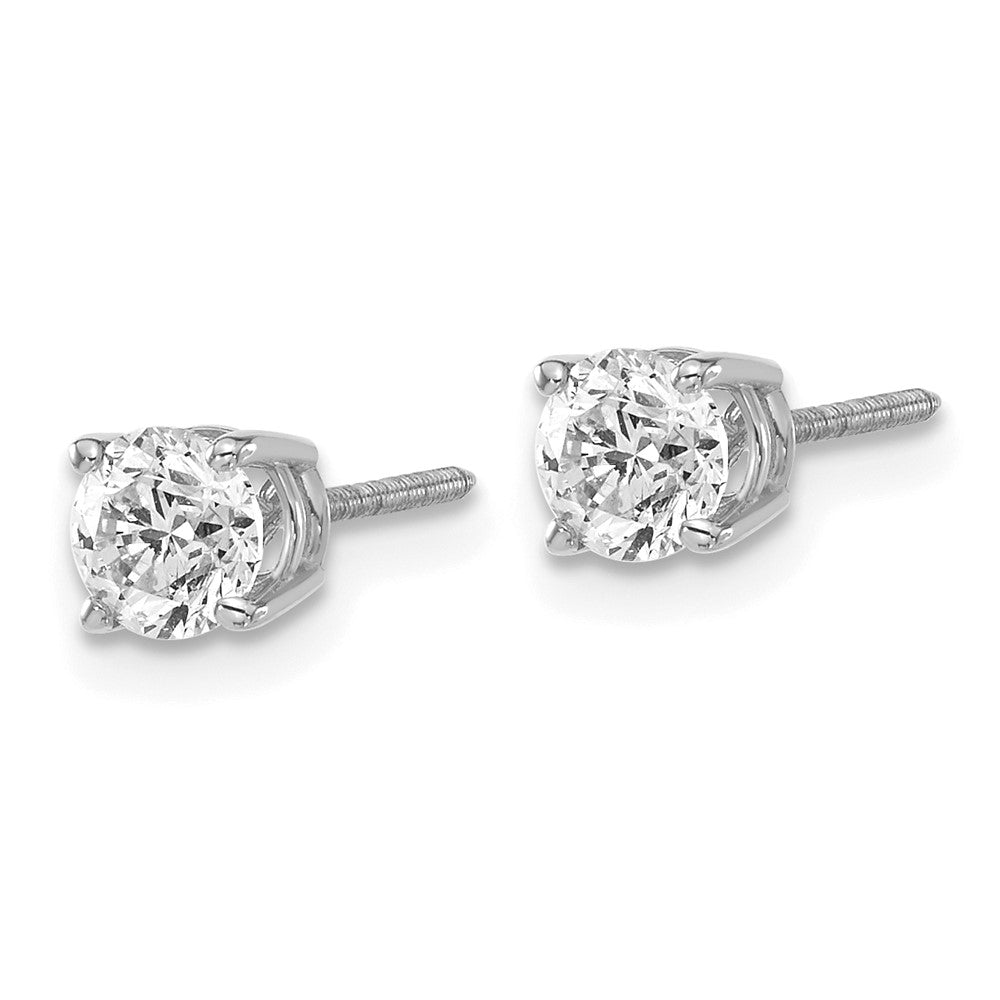
Studs sit directly on the lobe with no movement, no swing, and no snag. A 4–6 mm plain ball, CZ pavé, or diamond stud is the most versatile earring in any jewelry box. They're the only style universally appropriate for office, gym, sleep, and even showering in a pinch.
2. Gold Huggies — The New Default Everyday Earring
Huggies are tiny hinged hoops (8–12 mm) that "hug" the earlobe. They've quietly replaced studs as the most-worn everyday gold earring because they offer slightly more visual interest without the swing of a regular hoop. Hinged closures click shut, so they're nearly impossible to lose.
3. Small to Medium Gold Hoops — The Universally Flattering Pick
A 14–20 mm hoop is the "Goldilocks" size — visible, proportionate, and flattering on virtually every face shape. Stay under 25 mm and choose a thin gauge for daily comfort; reserve large or chunky hoops for evenings out.
4. Drop Earrings — Subtle Length Without the Drama
A small geometric or teardrop design (15–20 mm total length) hangs just below the lobe, adds elegance to a simple outfit, and still transitions to dinner. Choose lightweight, stationary drops for daily wear.
5. Threaders — Modern, Minimal, Slightly Advanced
A delicate chain threads through the piercing and dangles on both sides. Threaders feel fresh and architectural, but require a steady hand to insert. Best for someone who already has a confident earring routine.
6. Ear Climbers — Upward Movement, Elongated Look
Climbers start at the lobe and crawl upward along the ear, pulling the eye vertically and elongating the face. They're a great way to refresh a daily look without dangling movement.
Step 3: Match the Earring to Your Face Shape
- Round face: long, angular drops or small hoops under 20 mm add length and balance softness.
- Square face: round hoops or curved drops soften a strong jawline.
- Oval face: the lucky one — every shape, size, and length works.
- Heart face: teardrops or chandelier shapes that widen at the bottom balance a narrower jaw.
- Long/oblong face: wider studs and medium round hoops add horizontal width; avoid long vertical drops.
Step 4: Get Size and Weight Right (This Is Where Most People Fail)
Even the prettiest earring becomes punishment if it's too heavy. Use these tested benchmarks:
- Total weight: under 2 grams per ear for all-day comfort.
- Stud size: 3–6 mm is the comfort range; over 8 mm starts to feel heavy.
- Huggie diameter: 8–12 mm.
- Daily hoop size: 14–25 mm inner diameter.
- Drop length: 15–20 mm total for daily wear.
If you wear headphones, helmets, or glasses often, choose flat, low-profile designs that don't protrude — huggies and small studs win here.
Step 5: Choose the Right Closure (Often Overlooked, Always Important)
- Screw-backs: the most secure option for studs — perfect for travel and active days, but slower to put on.
- Hinged huggies: click shut and stay shut. Best of both worlds.
- Latch-back hoops: easy on/off with solid security.
- Silicone or locking push-backs: good for lightweight studs; replace yearly as they soften.
Step 6: Sensitive Ears? Read This Before You Buy
Allergic reactions are almost always caused by nickel in cheap alloys. Avoid this with one of these safe-post options:
- Solid 14K or 18K gold — the gold standard, literally.
- 925 sterling silver posts (in gold-plated pieces) — hypoallergenic for most people.
- Surgical or implant-grade steel — ideal for freshly pierced or very reactive ears.
- Titanium — the most allergy-friendly option of all.
Avoid earrings with brass or copper posts, even if the visible portion looks "gold." Plating wears off the friction zone first, and that's exactly where it meets your skin.
Step 7: Match Gold Color to Your Skin Tone
- Warm undertones (olive, peach, yellow): yellow gold makes you glow.
- Cool undertones (pink, red, bluish veins): white gold flatters most.
- Neutral or unsure: rose gold is the universal flatterer.
Step 8: Care for Your Gold Earrings Like a Pro
Three small habits will keep your gold earrings looking new for years:
- Remove before showering, swimming, sleeping in heavy pairs, and applying perfume, lotion, or hairspray.
- Wipe after wear with a soft microfiber cloth to remove skin oil and product buildup.
- Deep clean monthly with warm water and mild dish soap; gently brush textured areas with a soft toothbrush, rinse, and dry fully before storage.
Store earrings separately in soft pouches or compartments to prevent scratching, keep backs on the posts when not worn, and avoid ultrasonic cleaners on plated pieces.
Step 9: Build a Two-Pair Foundation, Then Expand
If you only buy two pairs of daily gold earrings, make them:
- A 4–6 mm gold stud for office, sleep, and minimal looks.
- A 14–16 mm small hoop or 10 mm huggie for everything else.
Together, these two pairs cover roughly 90% of daily styling needs. Once that foundation is in place, you can add drops, threaders, or climbers based on personal taste rather than necessity.
Step 10: Check Authenticity Before You Pay
Always look for a hallmark stamp such as 14K, 18K, 585, 750, or BIS. Buy only from reputable retailers that provide an authenticity certificate, a clear return policy, and ideally a sizing exchange or polishing service.
Mobile-Friendly Summary Table
| Decision | Best Choice for Daily Wear | Why It Works |
|---|---|---|
| Karat | 14K (durable) or 18K (rich color) | Balance of strength, color, and value |
| Top Style | Studs, huggies, or small hoops | Comfortable, snag-free, universally flattering |
| Size | Studs 4–6 mm · Huggies 8–12 mm · Hoops 14–20 mm | Most comfortable, visible without bulk |
| Weight | Under 2 g per ear | Prevents lobe stretching and fatigue |
| Closure | Hinged huggies, screw-backs, or locking push-backs | Maximum security with daily ease |
| Sensitive Ears | Solid 14K/18K, 925 sterling, titanium, or surgical steel posts | Nickel-free, hypoallergenic, long-lasting |
| Skin Tone | Warm → yellow · Cool → white · Either → rose gold | Enhances complexion naturally |
| Face Shape | Round → drops · Square → curved hoops · Oval → anything · Heart → teardrops · Long → wider studs/hoops | Balances facial proportions |
| Foundation Set | One stud + one hoop or huggie | Covers 90% of daily outfits |
| Care | Remove before water/products; wipe after wear; store separately | Prevents tarnish, scratches, and plating wear |
The Bottom Line
The best daily gold earrings aren't the trendiest — they're the ones that disappear into your routine because they're light, secure, allergy-safe, and proportionate to your face. Start with a solid karat (14K or 18K), choose a low-profile style (studs, huggies, or small hoops), keep weight under 2 grams, and pick a closure you trust. Care for them properly and one well-chosen pair will outlast every fast-fashion impulse buy you've ever made — and quietly become the most-worn jewelry in your collection.

 Contact Us