

Gold Earrings Decoded: The Insider Buying Guide Jewelers Don't Want You to Read

Buying gold earrings sounds simple — until you're staring at karat numbers, backings, hallmarks, and 14 different shades of yellow trying to figure out which pair won't turn your ears green by Tuesday. This is the no-fluff, jeweler-grade guide that walks you through every decision: purity, style, face shape, comfort, authenticity, budget, and care. By the end, you'll know exactly which pair belongs in your jewelry box — and which ones to walk away from.
TL;DR — The 60-Second Version
- Best karat for everyday wear: 14K (durable, affordable) or 18K (richer color, hypoallergenic).
- Safest universal style: Solitaire studs or small huggie hoops.
- Backing to look for: Screw-back or locking push-back for security.
- Authenticity check: Look for a hallmark stamp (e.g., 585, 750, 14K, 18K).
- Care rule of thumb: Last thing on, first thing off — keep them dry, clean, and stored separately.
1. Crack the Karat Code First (It Changes Everything)
Gold purity is measured in karats. Pure gold is too soft to hold its shape in jewelry, so it's mixed with alloys like silver, copper, or zinc for durability. The karat number tells you the gold-to-alloy ratio — and it controls price, color, durability, and skin sensitivity.
- 24K (99.9% gold): The deepest yellow, but bends, scratches, and dents easily. Best as a statement piece, not daily wear.
- 22K (91.7% gold): Common in traditional South Asian and Middle Eastern jewelry; rich color with cultural value.
- 18K (75% gold): The luxury sweet spot — vivid color, hypoallergenic-friendly, holds value.
- 14K (58.3% gold): The everyday workhorse — tough, affordable, slightly lighter in tone.
- 10K (41.7% gold): The most durable and budget-friendly, but with the palest gold hue.
14K Pros
- Resists scratches and dents
- 20–30% cheaper than 18K
- Perfect for active lifestyles
14K Cons
- Slightly less vibrant color
- More alloy can trigger sensitive skin
18K Pros
- Richer, warmer yellow tone
- Hypoallergenic-friendly
- Higher investment value
18K Cons
- Softer — scratches more easily
- Higher price tag
2. Yellow, White, or Rose? Match Gold to Your Skin Tone
The "color" of gold comes from the alloys mixed in. Choosing the right one isn't about trends — it's about what makes your complexion glow.
- Yellow gold: Flatters warm undertones (olive, peach, golden). The most classic and timeless option.
- White gold: Flatters cool undertones (pink, blue-ish, fair). Modern, sleek, pairs beautifully with diamonds.
- Rose gold: Romantic and universally flattering — works on nearly every skin tone thanks to its warm-pink hue.
A quick at-home test: check the veins on the inside of your wrist. Green-tinted veins lean warm (yellow/rose), blue-tinted lean cool (white). Both? You're neutral and can wear all three.
3. Pick the Right Style for Your Lifestyle
The "best" style is the one you'll actually wear. Match the design to your day — not to a Pinterest board.
Studs — The Everyday Hero
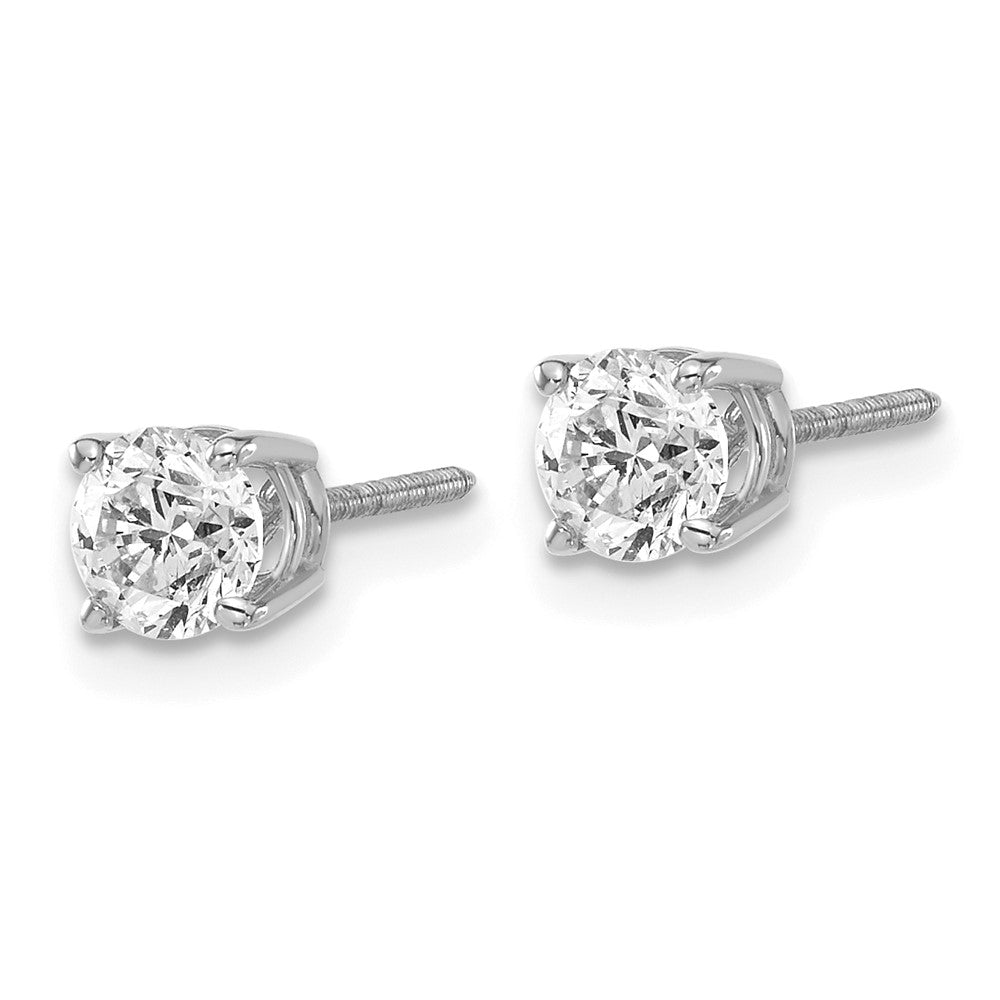
Solitaire studs, ball studs, geometric studs, bezel-set diamond studs. Comfortable, low-profile, and impossible to outgrow. Perfect for sleeping in, working out, or layering with other earrings.
Hoops — Versatile and Iconic
Thin hoops feel elegant and professional. Chunky hoops add personality. Huggie hoops sit close to the lobe and rarely snag — making them ideal for active wearers.
Drop & Dangle — For Drama and Elongation
Drop earrings draw the eye downward, elongating the neck and softening the face. Save them for events, dinners, or when you want jewelry to do the talking.
Statement & Designer — When You Want to Be Seen
Oversized hoops, sculptural cuffs, or pavé-set chandeliers. Pair with simple outfits so the earrings remain the focal point.
4. Choose by Face Shape (Yes, It Really Matters)
- Round face: Angular studs (square, triangle, kite) and long drops add structure.
- Square face: Round, oval, or pearl studs soften the jawline.
- Oval face: Almost any shape works — experiment freely.
- Heart-shaped face: Teardrops and wider-bottom drops balance a narrow chin.
- Long face: Studs, clusters, and short huggies add width without further elongation.
5. Don't Underestimate Backings & Comfort
The most beautiful earring is useless if it falls out at brunch or aches by 3 p.m. Look at the back as carefully as the front.
- Push-back (friction): Easy on, easy off — great for everyday studs.
- Screw-back: Maximum security for diamond studs and gifts. Worth the extra few seconds.
- Locking / La Pousette: The premium choice for heirloom or high-carat pieces.
- Ball-screw posts: Popular for piercings and lobes that stretch.
For weight: earrings under 1 inch and well below 5 grams per ear are the comfort sweet spot for all-day wear. Heavy earrings can stretch piercings over time.
6. Diamonds, Pearls, or Plain Gold? The Stone Decision
- Plain gold studs/hoops: Most versatile, easiest to layer, lowest maintenance.
- Diamond studs: Add quiet sparkle that elevates jeans-and-a-tee or a black-tie gown equally well. Lab-grown diamonds offer the same brilliance at a lower price and smaller environmental footprint.
- Pearl studs: Soft, feminine, and ageless — ideal for workwear and formal occasions.
- Colored gemstones: Sapphires, rubies, emeralds, morganite, aquamarine — perfect for birthstones, personality, and a pop of color.
- Cubic Zirconia: Maximum sparkle on a budget — useful as backup or travel jewelry.
7. Spot Authenticity Like a Jeweler
Real gold earrings carry a hallmark stamp — usually on the post or back. Look for:
- 14K or 585 = 14 karat gold
- 18K or 750 = 18 karat gold
- 22K or 916 = 22 karat gold
- 24K or 999 = pure gold
Buying online? Stick to reputable retailers that provide certificates of authenticity, return policies, and clear metal disclosures. Avoid listings that say only "gold-tone," "gold-plated," or "gold-filled" if you're paying solid-gold prices.
8. Sensitive Ears? Here's What to Buy
Most metal allergies are caused by nickel in the alloy. To stay safe:
- Choose 18K or higher — less alloy means less irritation.
- Look for explicit "nickel-free" labeling.
- Pick solid gold posts, not plated ones (plating wears off and exposes the base metal).
- For severe sensitivities, consider medical-grade gold or platinum posts with gold fronts.
9. Set a Smart Budget (and Stick to It)
Price depends on four things: gold purity, weight in grams, stone quality, and craftsmanship. As a rough framework:
- Under $150: Small 14K studs, gold vermeil, or CZ-accented pieces.
- $150–$500: Solid 14K hoops, small diamond studs, or designer brand pieces.
- $500–$1,500: 18K solid gold, larger lab-grown diamond studs, or pearl + gold combinations.
- $1,500+: Natural diamond studs, halo settings, and heirloom-quality 18K pieces.
10. Care Like You Mean It
Gold doesn't tarnish like silver, but oils, sweat, lotions, and chlorine all dull its shine.
- Wipe with a soft microfiber cloth after each wear.
- Clean weekly with warm water, a drop of mild dish soap, and a soft brush.
- Remove before showering, swimming, exercising, or applying perfume.
- Store each pair separately in a soft pouch or lined compartment.
- Check backings monthly — replace any that feel loose.
- Book a professional clean once a year for stone-set pieces.
Mobile-Friendly Summary Table
| Decision | Best Choice | Why It Wins |
|---|---|---|
| Daily wear karat | 14K | Durable, affordable, scratch-resistant |
| Luxury & sensitive ears | 18K | Richer color, fewer allergens |
| Statement piece only | 22K / 24K | Deepest yellow, highest purity |
| Warm skin tone | Yellow gold | Enhances natural warmth |
| Cool skin tone | White gold | Sleek and modern contrast |
| Universal flatterer | Rose gold | Works on nearly every undertone |
| Round face | Angular studs / long drops | Adds structure |
| Square face | Round / oval / pearl studs | Softens the jawline |
| Active lifestyle | Huggie hoops / screw-back studs | Won't snag or fall out |
| Office wear | Small diamond or pearl studs | Polished and professional |
| Sensitive ears | 18K+ nickel-free | Minimizes allergic reactions |
| Budget pick | 14K gold vermeil or CZ | Sparkle at a fraction of the cost |
| Authenticity check | Hallmark stamp (585/750/916) | Verifies real gold content |
| Best backing | Screw-back or locking | Maximum security |
| Care routine | Mild soap + soft brush weekly | Keeps gold bright safely |
The Bottom Line
The perfect gold earrings aren't the most expensive, the trendiest, or the ones with the biggest stone — they're the pair that fits your karat preference, complements your skin tone, suits your face shape, and survives your real-life routine. Start with a versatile 14K or 18K solitaire stud as your foundation, add a pair of huggie hoops for variety, then layer in drops or statement pieces as your collection grows. With the checklist above, you can shop online or in-store with the confidence of someone who knows exactly what they're looking at.
FAQ
Is 14K or 18K gold better for everyday earrings?
14K is more durable and budget-friendly; 18K has richer color and is better for sensitive ears. For most people, 14K wins for daily wear and 18K wins for special pieces.
Can I shower with gold earrings?
You can, but you shouldn't. Soap film dulls the shine, and chlorine or saltwater can damage alloys and any set stones. Take them off first.
Do real gold earrings tarnish?
Pure gold doesn't tarnish. Lower karat alloys can dull or discolor slightly over time, especially when exposed to chemicals — regular cleaning solves this.
How do I know my gold earrings are real?
Check for a hallmark stamp (14K, 18K, 585, 750, 916). Buy from reputable jewelers who provide certificates of authenticity.
Are gold studs hypoallergenic?
Higher-karat gold (18K and above) is significantly less likely to cause reactions. For ultra-sensitive skin, look for nickel-free certifications.

 Contact Us